What the Weather Here Does to It
Johnson City sits in a moderate cold climate band, which means the metal in your door assembly goes through real temperature swings across a year without the brutal extremes of a harder winter zone. That swing still matters. Steel tracks contract in the cold months and the lubricant in rollers and hinges thickens up, which is why a door that ran quiet in August starts groaning by December. It's not breaking down - it's just stiffer, and stiff metal rubbing on stiff metal is where most of the squeal comes from.
Most of the housing stock across this service area went up between 1958 and 2001, with the bulk of it dating to the 1960s and 70s across the twenty communities we work in, from Central and Pine Crest out through Jonesborough and Oak Grove. Doors and openers installed or replaced during that window are old enough now that the factory grease has long since gummed up or washed out. A seasonal temperature swing on thirty- to sixty-year-old hardware produces noise a newer system wouldn't make. That's the pattern we see, not a coincidence.
What Most People Get Wrong
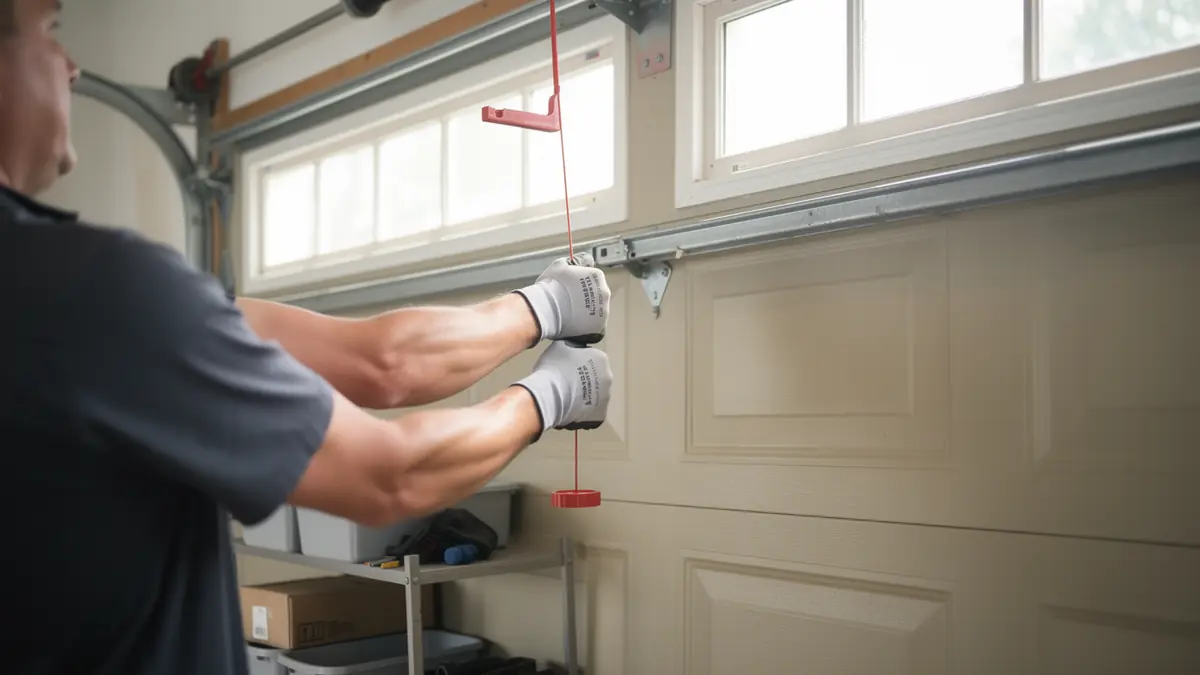
The common mistake is assuming every noise means the same fix: spray some lubricant on it and move on. On a door from this era, that treats the symptom and skips the part that's actually wearing out. A rhythmic thump once per rotation is almost always a flat spot on a roller, and no amount of oil fixes a roller that's already worn a dead spot into itself. A sharp bang on opening is more often a loose hinge or a spring losing tension, not a track problem at all.
The other mistake is panic over the wrong noise. A grinding sound at the very start of travel, right as the opener engages, is frequently just the drive gear meshing - not a sign the opener is dying. People hear that and start pricing a full replacement when what's needed is fifteen minutes of attention to one part. Knowing the difference between "wears out eventually" and "fails today" is most of the job here.
When Waiting Is Fine
Not every noise needs a same-day call. If your door still opens and closes the full distance, holds position without drifting, and the noise is a consistent squeak rather than a new or changing sound, you can usually wait and get it looked at on a normal schedule rather than an emergency one. That's worth knowing in a service area where the median household income runs around $54,953 - a scheduled visit costs less than an after-hours one, and there's no reason to pay emergency rates for a squeak that's been there for weeks.
What changes the calculus is a sound that's new, loud, or getting worse call to call. If the noise showed up suddenly, or if it's accompanied by the door moving unevenly, stop using it and don't wait. On hardware this old - much of it installed when the house itself was built in the 1960s or 70s - a worn part rarely announces itself gradually and then stops. It tends to get worse until something lets go.
The Situation
Across the roughly 22,358 owner-occupied houses in this service area, a big share carry garage door hardware that's never been replaced since the house was built. That's not unusual for housing from 1958 through 2001 - torsion springs and rollers from that era simply outlast their expected service life because nobody thinks about the garage door until it stops working. The honest limitation here: once a spring or roller is actually worn, lubricant and adjustment won't buy you much more time, and we'll tell you that instead of charging you for a service call that just delays the real fix.
If you're not sure which category your noise falls into, that's a reasonable thing to ask about rather than guess at over the phone.
Talk to a local pro
Garage door trouble in Johnson City?
Same-day service with honest, upfront quotes.