What the Weather Here Does to It
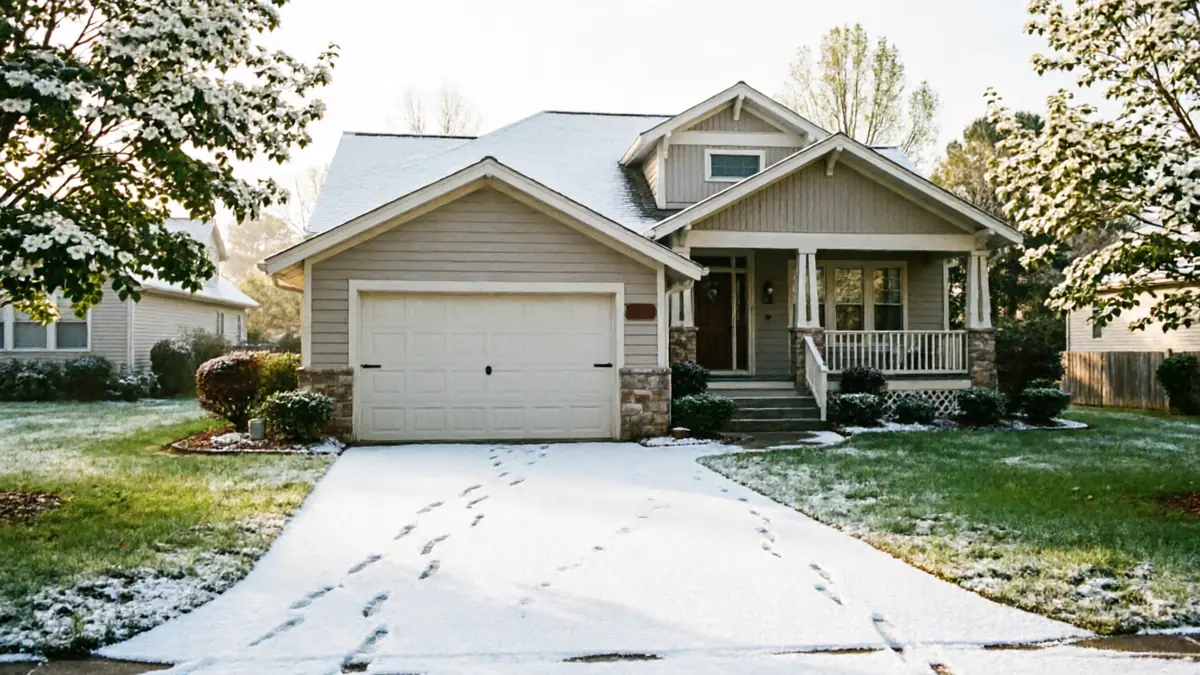
Johnson City sits in a cold moderate climate band, which means the garage sees real temperature swings between a mild afternoon and a hard overnight drop. Steel doesn't like that. A torsion spring is wound under tension, and cold steel loses a measure of flex it has at warmer temperatures. That makes it more brittle right at the moment the metal is already fatigued from years of cycling.
Most houses in this area were built between 1958 and 2001, with a lot of that stock clustered in the 1960s and '70s across the older neighborhoods. A spring installed when one of those houses went up has had decades of seasonal cold to work against it, cycle after cycle, long before it finally lets go. That's why the calls cluster the way they do - it's not bad luck, it's a 50-plus-year-old spring meeting a cold morning.
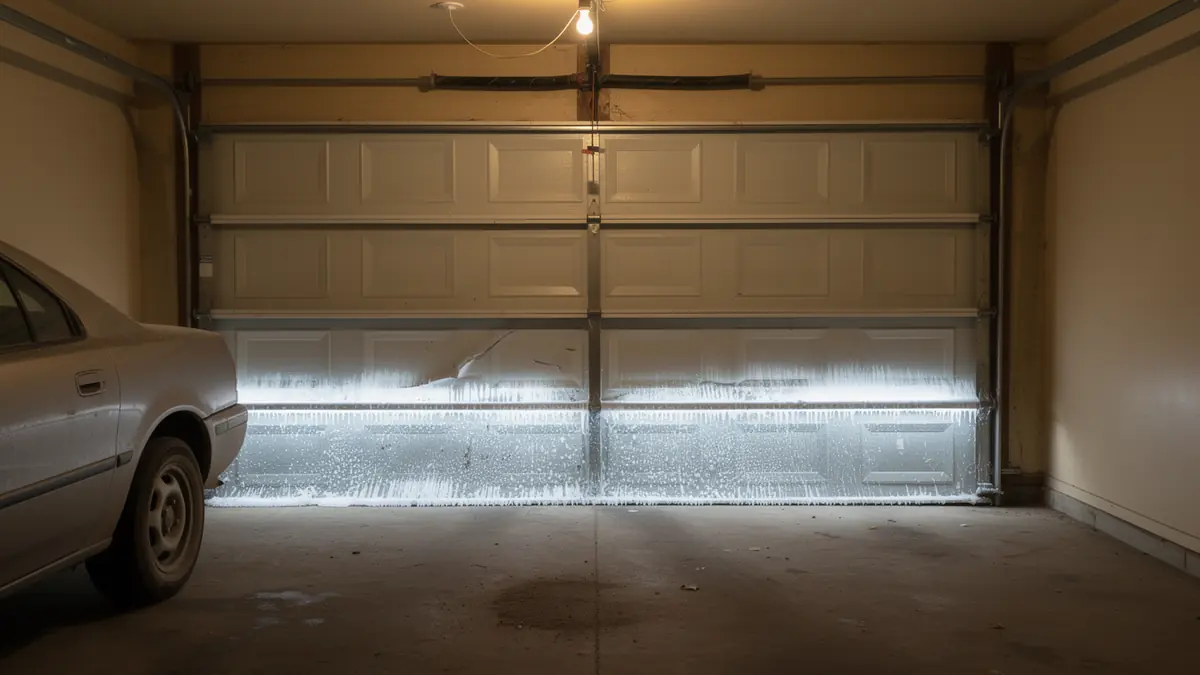
The failure itself is usually sudden. You hit the opener button, there's a loud bang from the garage, and the door won't move or drops hard on one side. That bang is the spring parting, not the opener failing.
What Most People Get Wrong
The most common mistake is trying to force the door open or closed by hand once a spring has gone, especially on a heavier two-car door. Without the spring doing its job, the full weight of the door is on the cables and the opener, and that's how cables snap or tracks bend.
The second mistake is assuming the opener is broken. On a lot of the older homes in this area, the opener is newer than the door hardware - people replace the opener once, maybe twice, over a house's life, but the springs and track often date back much further. If the opener hums or clicks but the door doesn't lift, the spring is almost always the real problem, not the motor.
The third mistake is treating one broken spring as a one-off. On a two-spring setup, if one has failed from age and cold, the other is usually close behind - it's seen the same years and the same winters. Replacing both at once costs less in the long run than a second call a few months later.
When Waiting Is Fine
Not every cold-weather symptom means an emergency call tonight. If the door is noisier than usual, moves a little slower, or the spring looks visibly stretched but hasn't broken, that can usually wait for a daytime appointment instead of an after-hours one. A spring that's straining but intact isn't likely to fail in the next few hours just because the temperature dropped.
If the door is already down and the garage isn't your only way into the house, that's also a fine time to wait a day rather than push for same-night service. Where it stops being fine is a door stuck halfway open, a broken spring with the door still up, or any situation where the garage won't close and you're leaving the house exposed overnight in that kind of cold. Those are the ones worth the faster call.
The Situation
Given how much of the housing in this area dates to the 1958-2001 range, with so much of it concentrated in the 1960s and '70s, a large share of the springs we replace are original-era hardware that's simply run out of cycles, with the cold weather being the thing that finally snaps them rather than the cause on its own. We don't stock every spring size for every era of door on the truck - some of the older torsion setups use hardware that isn't common anymore, and those jobs can mean a short wait on the part rather than a same-day fix. That's the honest limit: we'll tell you straight if your door is one of those instead of promising something we can't deliver that day.
Talk to a local pro
Garage door trouble in Johnson City?
Same-day service with honest, upfront quotes.