What the Weather Here Does to It
Johnson City sits in a cold-moderate climate band, which means steel sections contract and expand enough each winter to work bolts loose on doors installed before insulated panels were standard. Most houses here went up between 1958 and 2001, with the bulk dating to the 1960s and 70s, so a lot of garage doors are original equipment from that build era, or a direct replacement installed decades ago on the same track and jamb.
That matters because cold doesn't break a door all at once. It loosens hinges a quarter turn at a time, it stiffens grease in a bearing until a roller starts chirping, and it shrinks a wood jamb enough that the seal never sits flush again by February. On a single-car door from that era, with a single torsion spring rated for the original panel weight, a few winters of that cycle is usually what finally snaps the spring rather than one dramatic cold snap. If your door is loud, slow, or crooked going into winter, that's the climate doing its normal work on old hardware, not a sign the whole unit is failing.
What Most People Get Wrong
The common mistake is treating any noise or stiffness on an older door as proof it needs full replacement. Given how much of the local stock is 1960s-70s construction, we see a lot of doors where the panels, track, and header are all sound, and the actual failure is a single part: a cable that's frayed off the drum, a roller that's cracked, a spring that's reached its cycle count. Swapping that one part on a door from that build era often costs a fraction of a new unit and buys another decade of normal use.
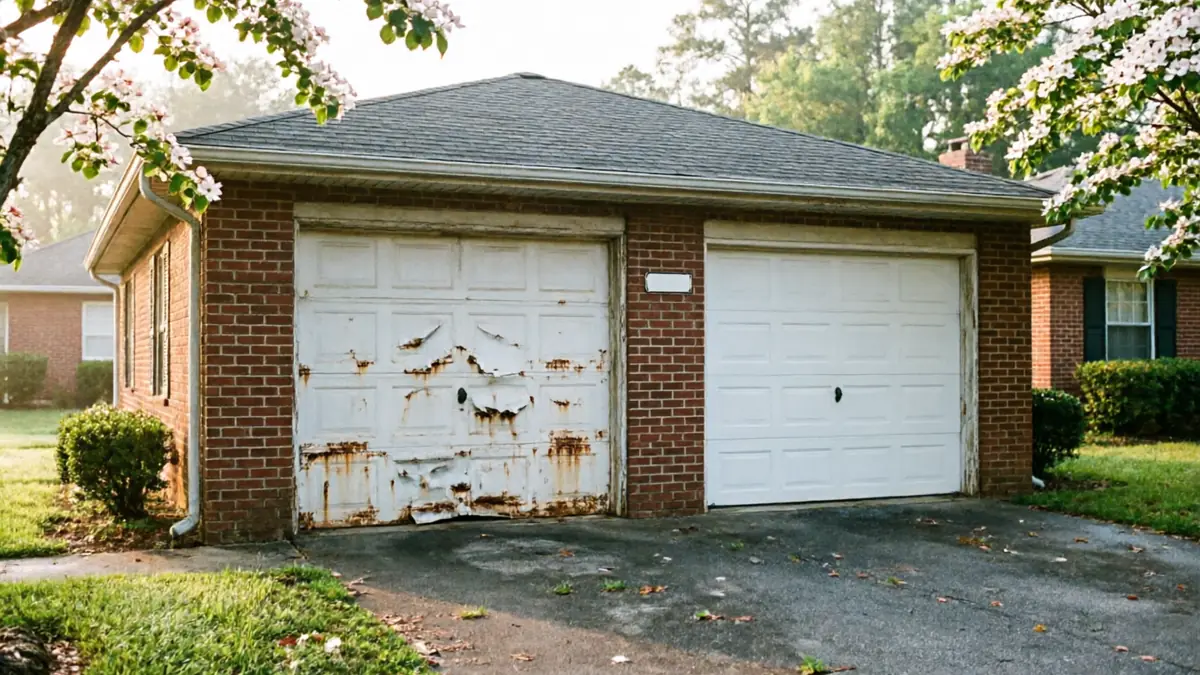
The other side of that mistake is assuming an old door is automatically cheap to keep going. If the track has been bent and straightened more than once, or the panels have been patched after storm damage, you're repairing a door that's already been repaired past the point where another fix holds. That's the honest limit here: we won't keep billing you for small fixes on a door that's structurally tired just because the original purchase price feels like it should still be getting value. At some point the labor on repeated small jobs adds up to more than a new door would have cost.
When Waiting Is Fine
Not every symptom on a 1960s or 70s door needs a same-week call. A slightly off-balance door that still opens and closes smoothly, a little surface rust on a panel that hasn't touched the steel underneath, a weatherstrip that's cracked but still sealing most of the gap - those can wait for a scheduled visit instead of an emergency one.
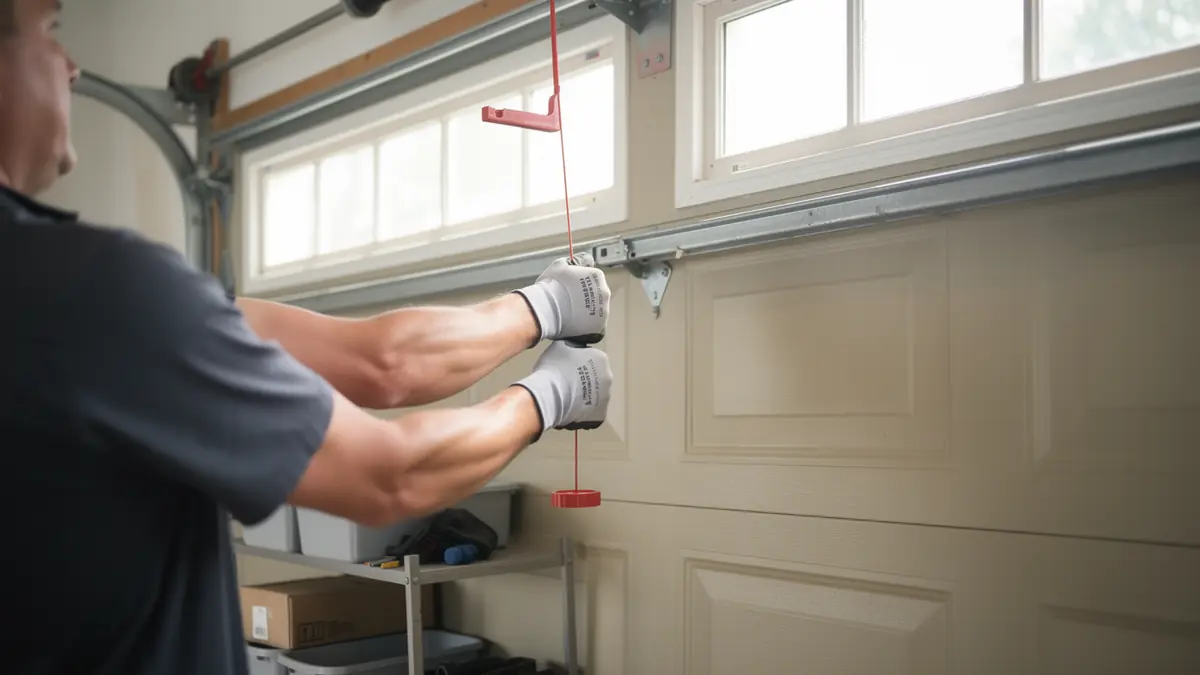
With a median household income of $54,953 across the service area, a lot of owners here are weighing a $200 spring job against a $1,200 replacement, and the math usually favors the repair when the door itself is sound. That same math applies to timing: if the door still works, there's no cost advantage to rushing a repair before the part actually fails. The exception is anything involving the spring or cable under tension - that's not a wait-and-see item regardless of how minor it looks, because the failure mode is sudden and the parts are under load the whole time the door sits closed.
The Situation
Across the 42,230 households and 22,358 owner-occupied houses we cover, the majority of garage doors on 1960s and 70s builds use hardware that newer production lines don't carry anymore - sizes and spring winds that take a trip to source rather than pulling off a shelf. That's worth knowing going in: a repair on an original door sometimes takes a day or two longer than a repair on something installed in the last ten years, simply because of the part.
We work jobs out to Jonesborough, Gray, and Elizabethton, each within about six to eight miles, and the same 1960s-70s housing stock shows up in all of them, along with Central and Pine Crest closer in and Oak Grove, Spurgeon, and Unicoi a bit further out. The pattern holds across most of that footprint: doors from the original build era are usually worth fixing once, sometimes twice, before replacement actually makes more sense than another repair.
Talk to a local pro
Garage door trouble in Johnson City?
Same-day service with honest, upfront quotes.