What the Weather Here Does to It
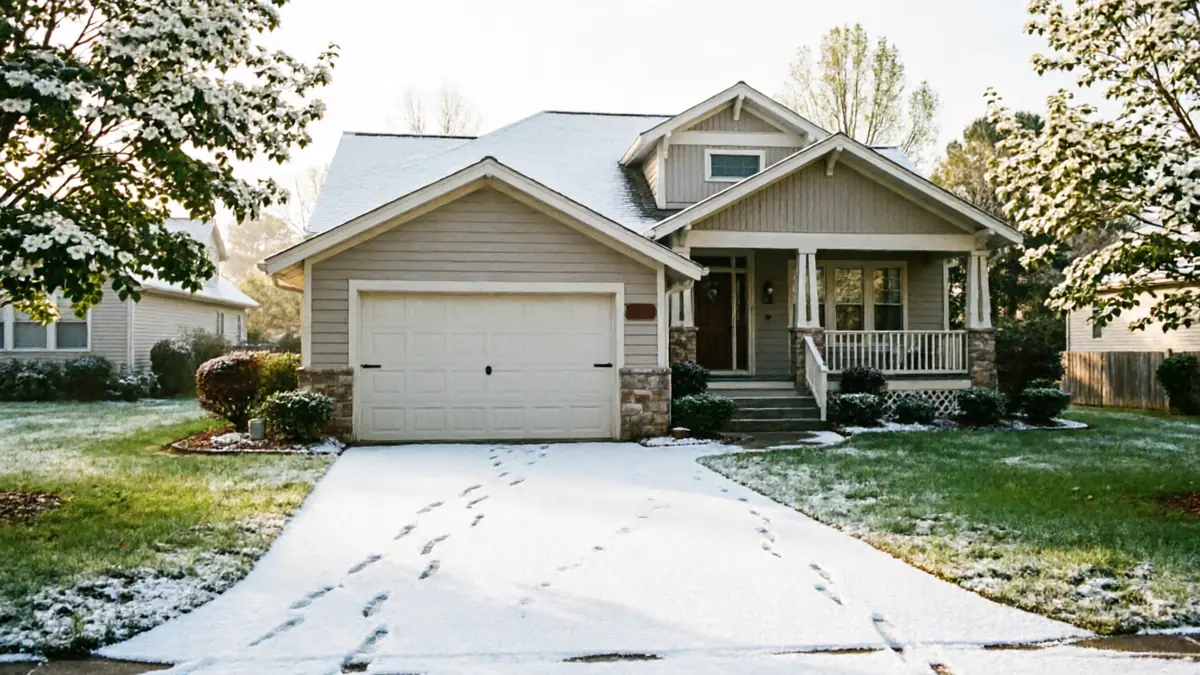
Johnson City sits in a cold-moderate climate band, and that matters more for garage doors than people expect. Most of the housing stock here went up between 1958 and 2001, with the bulk from the 1960s and '70s across the twenty areas we run calls in. Doors from that era carry steel torsion springs rated for a narrower temperature swing than what gets installed today. When the temperature drops hard overnight, that steel contracts, tension shifts, and a spring that was fine in October snaps on the first cold morning in December. We see it every winter: calls that start as "the door won't open" end with a spring on the garage floor. The same cold also stiffens nylon rollers on the older tracks, so a door that used to glide now grinds and jumps, especially on the first lift of the day before anything's warmed up. None of this is about neglect. It's what happens when 1960s and '70s hardware meets a real winter, year after year, for decades. A service call in this climate isn't just "fix what's broken" - it's checking whether the spring, the rollers, and the track are matched to the season, not just the door.
What Most People Get Wrong
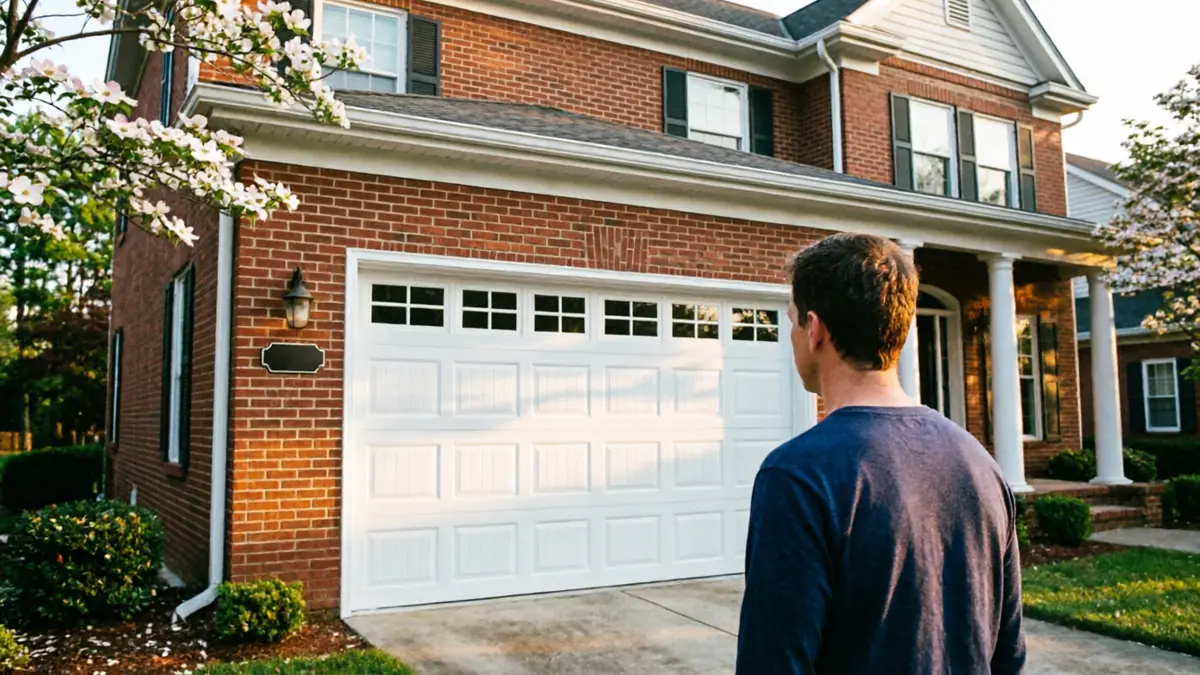
Because Johnson City's housing runs mostly 1960s to '70s stock, a lot of homeowners assume a grinding or sticking door means the opener's dying. It's usually not the opener. On houses from this era, the opener is almost always a later add-on bolted to original torsion hardware that's forty, fifty, sixty years old. Replace the opener and the door still grinds, because the rollers, the track, and the spring tension never got touched. The other mistake: people wait for the door to stop working entirely before calling, when the warning signs - slow close, uneven lift, a louder-than-usual motor - showed up months earlier. On a house built in 1975, hardware that's never been serviced is hardware running on borrowed time, and in this climate borrowed time runs out in winter, not summer. We also hear "it's just noisy" a lot. Noise on original-era hardware is rarely cosmetic. It's usually a roller or a bearing that's past its life, working harder than it should, in a system engineered to last decades but not without attention.
When Waiting Is Fine
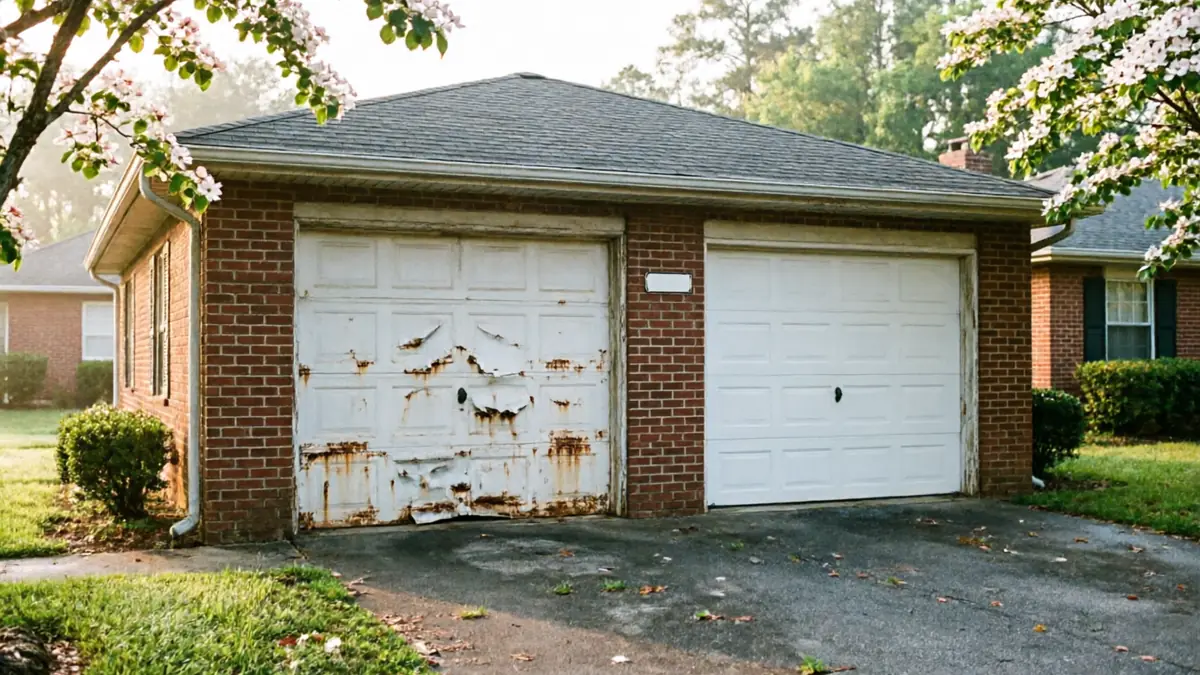
Not every creak needs a truck. If the door still opens and closes smoothly, closes flush, and the noise is a light rattle rather than a grind or a bang, you can usually wait for a scheduled visit instead of an emergency call. A single stiff roller on an otherwise balanced door isn't an emergency - it's a maintenance item. Cosmetic rust on an older steel panel, common enough on houses from the 1958-2001 range, doesn't need same-week attention unless it's at a hinge point. Here's the honest limit on our end: if a part needs to be special-ordered - some of the older torsion hardware from houses built before the 1980s isn't stocked anywhere nearby - that waiting is on us, not you, and we'll tell you up front rather than pretend otherwise. What's not fine to wait on: a door that's stopped responding to the opener mid-cycle, a spring that's visibly separated, or cables that look frayed. Those are the calls we move up, because on hardware this old, a slow failure can go from annoying to dangerous in one more cold morning.
The Situation
We run calls across roughly 42,230 households in this part of Northeast Tennessee, including the closer-in areas like Central, Pine Crest, Jonesborough, and Oak Grove, all within about five to six miles, and farther out to Gray, Elizabethton, Spurgeon, Unicoi, Bluff City, and Valley Forge. About 22,358 of those households own the house they live in, and median household income across the service area sits around $54,953 - numbers that matter because they tell you most of these are owner-occupied homes with original hardware that someone has to decide whether to repair or replace, not a landlord's spreadsheet line. Out past the twelve-mile mark we still get calls from Colonial Heights, Hampton, Blountville, Hunter, Erwin, and Fall Branch, and occasionally from Walnut Hill, Bristol, Bloomingdale, and Butler toward the edge of what we cover. The spread matters because the housing era doesn't change much across that range - it's still mostly 1958-2001 stock, which means the same spring tension problems, the same original-track grinding, show up whether the call's five miles away or eighteen.
Talk to a local pro
Garage door trouble in Johnson City?
Same-day service with honest, upfront quotes.