
Worn sensors and gears
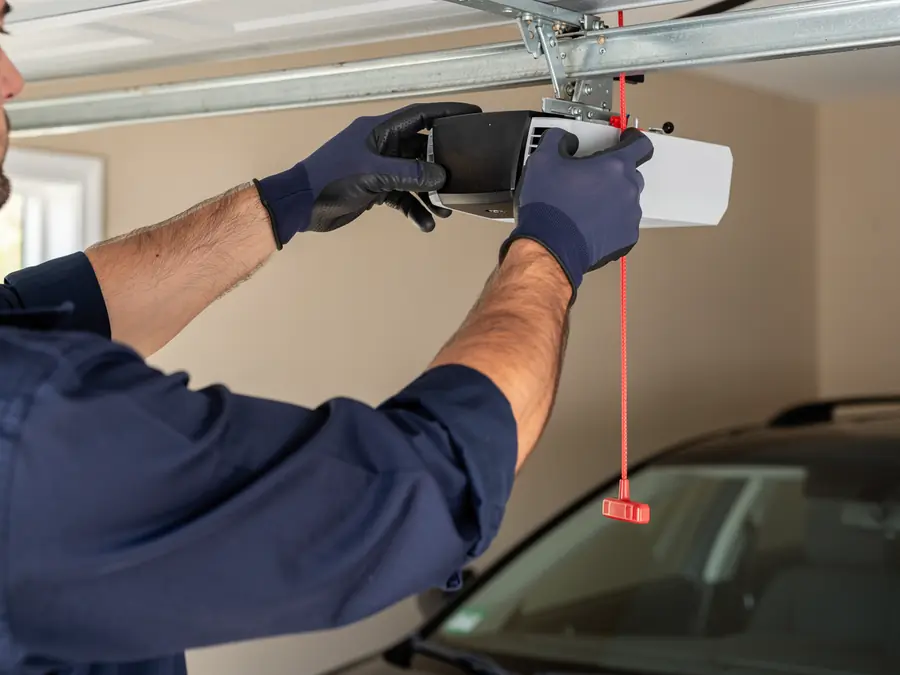
Openers from that era, if they haven't already been swapped once, run on worn-out drive gears or sensors that no longer trip correctly, which shows up as a door that reverses for no reason or won't close at all.
Oak Grove, Johnson City
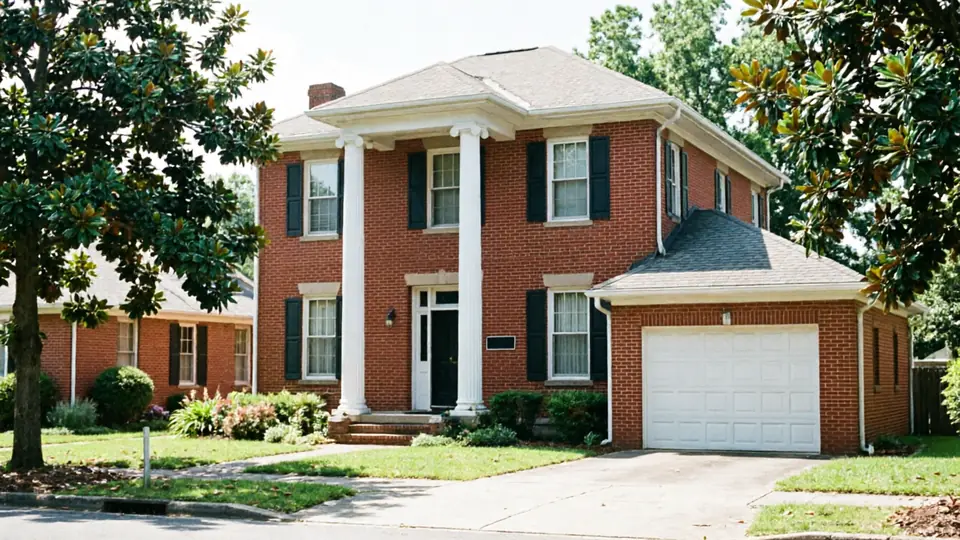
Oak Grove homes mostly date to 1987, later than the surrounding area, which means steel doors and factory torsion springs, not the parts a 1960s neighborhood needs.
Our process
Oak Grove's housing stock centers on 1987, noticeably newer than a lot of the ground we cover around Johnson City, where 1960s and 70s construction is the norm.
That matters on a service call. A house built in 1987 almost always went up with a factory steel raised-panel door on a chain or belt-drive opener and a torsion spring mounted on a standard center bracket over the header.
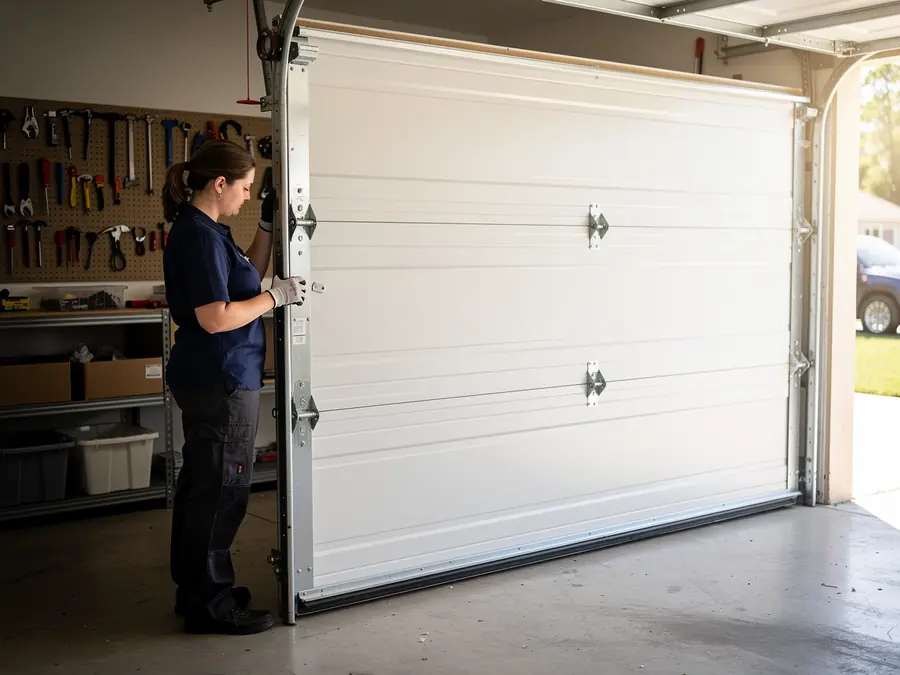
We're not hunting down an obsolete extension-spring setup or a door hung on a track nobody makes a roller for anymore. We show up with the common torsion spring sizes, standard steel hinges, and the nylon or steel rollers that fit this generation of hardware, and in most cases that's what the job needs.
We travel to Oak Grove from Johnson City, about 6 miles out, so we're not working off cold guesses about what's behind the door when we pull up.
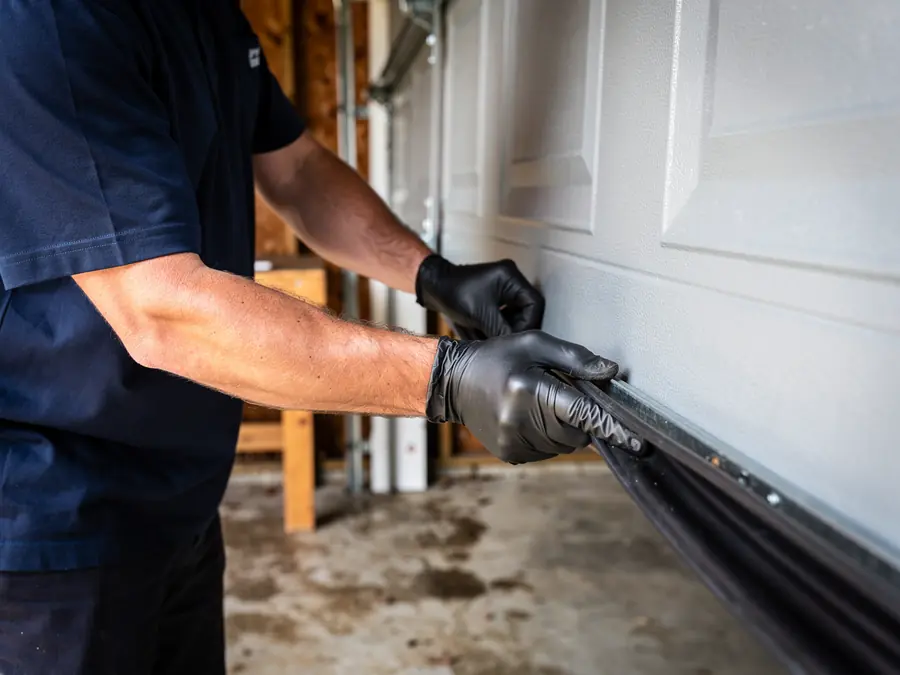
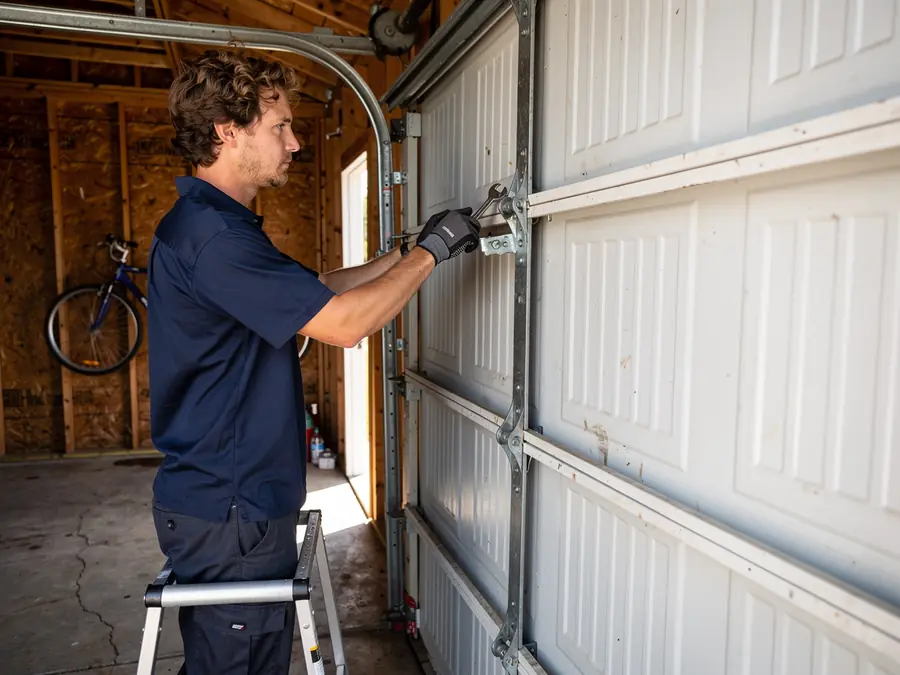
On a call we check the spring wind and cycle count first, since torsion springs from the late 80s are closing in on 35+ years of service even with light use, then move to track alignment, opener gear wear, and the weatherstrip and bottom seal, which age out faster than the steel does. Most repairs here are a spring swap, a roller set, or an opener logic board - not a full door replacement.
Watch-outs
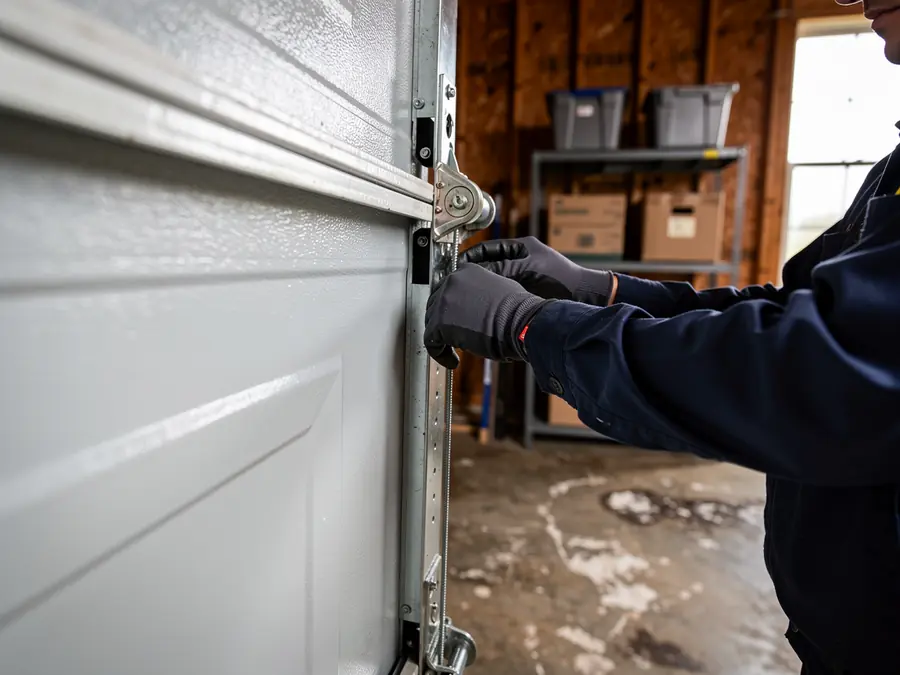
The torsion spring is the first thing to watch. A spring installed with an 80s-era door is well past any reasonable service life, and when it goes, it goes without much warning - a loud bang, then a door that won't lift or slams down hard.
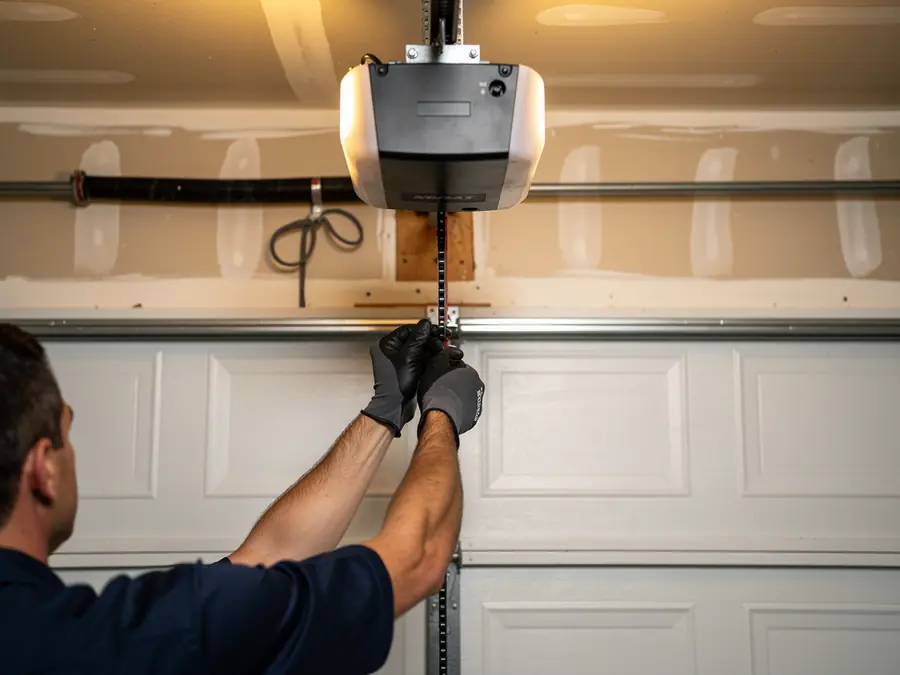
Openers from that era, if they haven't already been swapped once, run on worn-out drive gears or sensors that no longer trip correctly, which shows up as a door that reverses for no reason or won't close at all.
Cables fray at the drum from repeated cycling, and on a steel door that's been painted over a few times, the bottom panel can rust through at the weather seal channel where water sits.
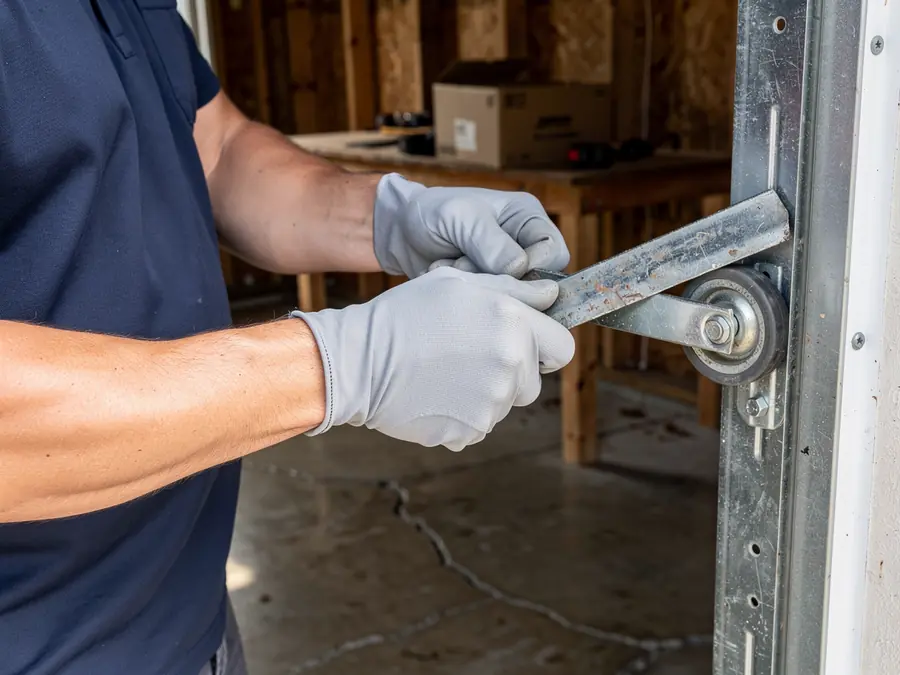
Rollers on the original steel shafts wear oval over the decades and start binding in the track, which sounds like grinding before it sounds like anything else. None of this is unusual for a door this age - it's just due.
Local causes
Oak Grove sits in a cold-moderate climate band, which means real freeze-thaw cycling every winter. That cycling is hard on garage door hardware specifically: steel contracts in cold, grease in bearings and rollers stiffens, and a spring under tension that's already fighting age-related fatigue has to work harder to lift a door on a 20-degree morning than it does in July. Over enough winters that adds up to earlier failure than you'd see in a warmer climate, even on hardware that's otherwise sound.
With roughly 1,938 households in Oak Grove and a median income of $63,625 - higher than the wider service area's $54,953 - most of these doors were installed to a decent factory spec rather than a budget strip-down, so when something fails it's usually one component, not the whole assembly. That's good news for a repair call: a targeted fix instead of a full teardown.
DIY or pro
Checking the bottom seal, clearing the track of leaves and grit, and keeping the hinges and rollers lubricated with a light garage door grease are all fine to do yourself, and they genuinely extend the life of hardware this age. Testing the auto-reverse safety feature - set something in the door's path and confirm it stops and backs up - is worth doing every few months too.
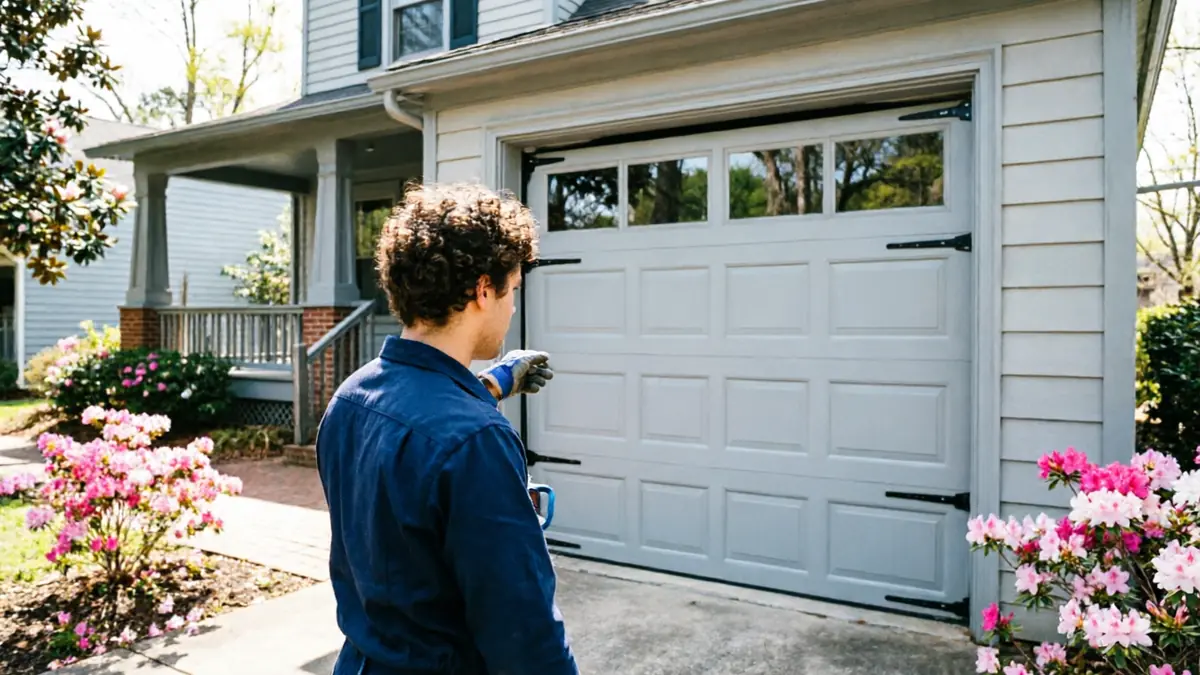
What we don't recommend doing yourself is anything involving the torsion spring. It's under enough tension to cause a serious injury if it releases wrong, and that's true whether the door is five years old or thirty-five. If the door is slow to open, sagging on one side, or you hear a bang followed by a door that won't budge, that's a spring call, not a weekend project. We'd rather tell you that up front than have you find out the hard way.
Questions
Most houses in Oak Grove date to around 1987, so the original doors - where they haven't been replaced - are steel raised-panel doors on torsion springs and chain or belt-drive openers. That's a different setup than the extension-spring doors common on older housing stock in the wider Johnson City area.
No. We're based in Johnson City and travel to Oak Grove, about 6 miles out, for service calls. We don't claim a local branch there - just want to be straight about that.
Torsion springs fatigue from cycle count and age, not visible wear. A spring from the late 1980s has usually logged decades of cycles, and cold-weather cycling in this climate band accelerates that fatigue. The door can look fine right up until the spring lets go.
Usually worth repairing. Doors from this era were typically installed to a solid factory spec, and most failures we see are a single part - spring, cable, or opener board - not structural damage to the door itself. Full replacement makes more sense when the panels are rusted through or badly dented.
Explore more
Ready when you are
Johnson City Garage Door Pros repairs and installs garage doors, springs and openers in Johnson City, TN and the surrounding area.